Spotlight pose of the week wc: 27/02/17

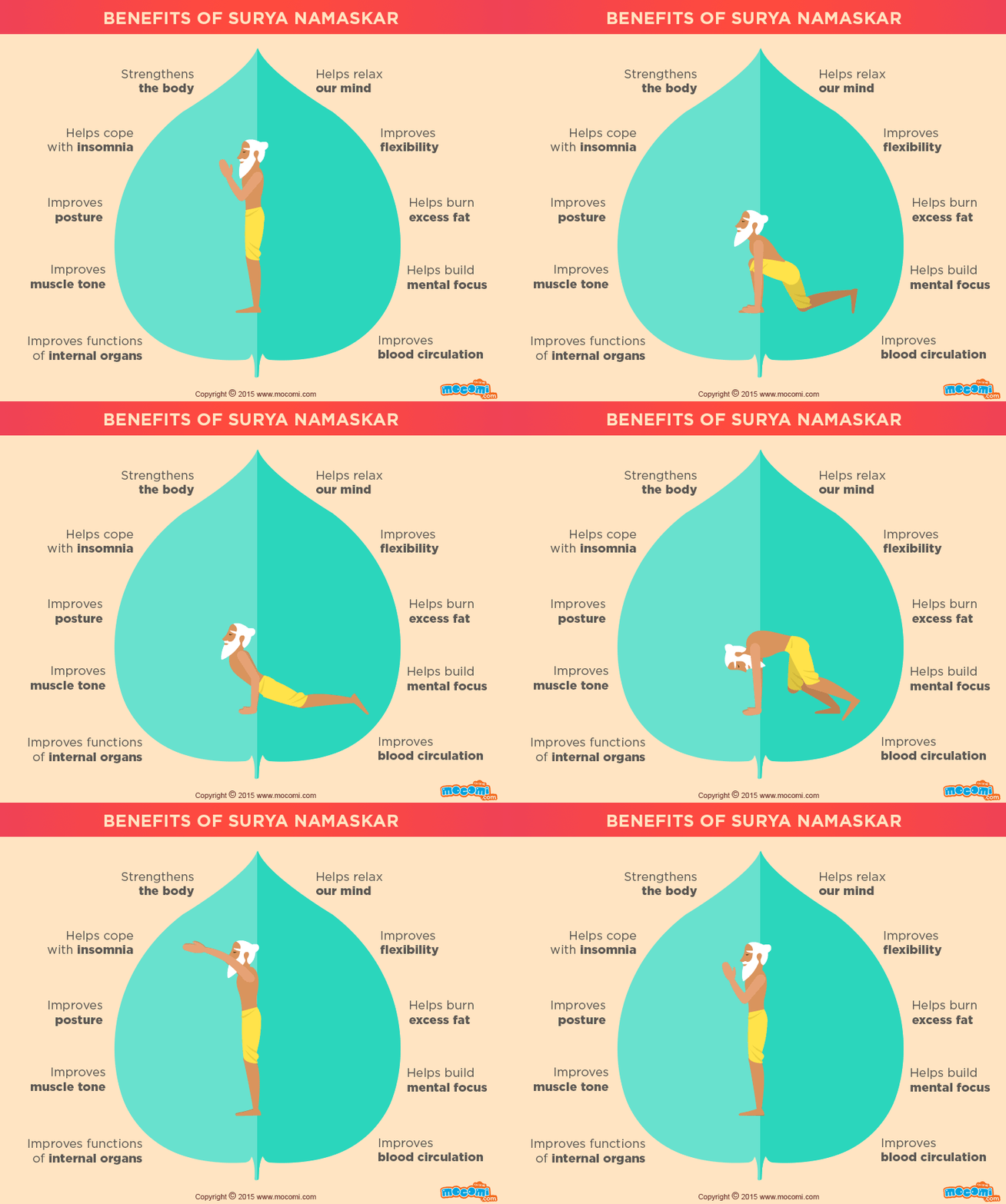
Actually it’s not a pose at all..it’s a sequence. !😍🙏:  The Sun Salutations  (Surya Namaskaras).  giphyThese fluid sequences stimulate circulation and a sense of creative expression, opening us to enjoy the simple flow and flavour of creative energy.  This week we look at the second chakra: Svadhistana (from sva, ‘self’ and adhistana, ‘dwelling place’), this chakra symbolizes the core feelings we have around likes and dislikes.  It represents the water element and so reflects the shifting tides of attraction and repulsion.  Often associated with the pelvic organs and the colour orange.  When in balance it represents creatively expressing ourselves in the world of relationships that helps to sustain our contentment, sensuality, sexuality, vitality and potency.  If we find ourselves being easily addicted, compulsive, lacking desire or having difficulty sustaining relationships, then svadisthana chakra is imbalanced.

Next week we move further up the ‘Rainbow Bridge’, to the chakra represented by the colour yellow, the Manipura Chakra


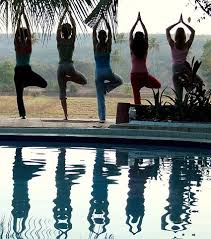
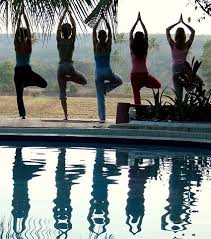
Spotlight pose of the week w.c. 20/02/17: Tree pose (Vrikshasana)

‘Ok Monday …Let’s do this !’….treepose

Today sees the start of the new yoga courses and class blocks with a focus on the Chakras 🙏

 http://www.yogajournal.com/article/chakras-yoga-for-beginners/beginners-guide-chakras/

Over half term it may be that you’ve had the opportunity to connect with nature, family and friends.  Maybe even to ‘find your roots’.  In classes this week we’ll be drawing our awareness to Muladhara, the Root Chakra’.   Vrikshasana (tree pose) embodies this chakra.  As we root/ground through the heals, we make a firm connection with the earth, giving us the dual action of ‘rising’ through the crown of the head, finding lightness, balance, energy and stability in our posture.

Taken from Chakras-Yoga for Beginner’s, Yoga journal

‘The Muladhara governs your family ties and feelings of survival, belonging, and guardedness. Your earliest memories are stored here, including whether or not your basic needs were met. When it is blocked or out of balance, you can become needy, have low self-esteem, or have self-destructive behaviors. When Muladhara is in balance, you feel strong and confident; you can stand up on your own two feet and take care of yourself.’


I’ll leave you with a caption from …

The Mythology Behind Vrikshasana (Tree Pose), Yoga international

Trees are patient creatures. They live a long, quiet time, and they know how to stand firm through all the changes of day and night, climate and season. Silently, those ashoka trees spoke to Sita: “Stay still, little sister. Be calm and steady, like us. Seasons change, we know, we know. This captivity is not forever. Stay still, and remember Rama.”

Thanks for reading, have a beautiful week 😉

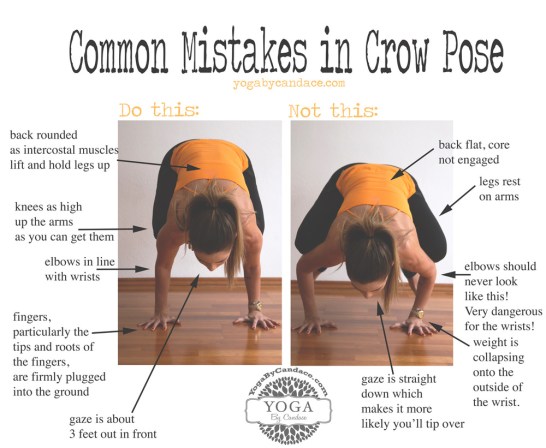
Spotlight Pose of the week (w.c. 06/02/17): Crow.

Image result for crow pose
Source 1 : Yoga By Candace

This week we draw our awareness to the Niyama (Self observation) of TAPAS *heat*! or purification through self discipline.

I’ve chosen crow pose as this embodies the self determination and dedication I’ve witnessed in many lovely yogis / yoginis as they’ve challenged themselves to work into the pose over weeks/months of practice 😍🙏! ‘Practice and All Is Coming.’  K. Pattabhi Jois

We might think of tapas as ‘dedication’ or igniting the fire WITHIN.  Not moving fast to create a lot of sweat, but, truly working the body, from the deep inside out: isometrically hugging muscles to the bone to create the internal heat.   This work/heat/sweat IGNITES change (on the mat and in your life 😉).

In vinyasa flow yoga a continuous flowing sequence is threaded together by the breath. The internal forms of the practice :the breath, drishti (or gaze), mudra (energy seals made through hand gestures) and bandha  (energy locks) create a strong moving meditation practice.


Ashtanga Vinyasa yoga has become known for its intensity and rigor because the flowing meditative movement allows students to work “on their edge”.  Concentration of the mind is demanded which causes internal heat (tapas) to arise in the body which can cause sweating (in contrast to ‘hot’ yoga which results from the external temperature eg. in a purposefully heated room).

Image result for crow pose

Source 2 :http://www.tinareale.com/5803/how-to-do-crow-pose-yoga/

Further reading / viewing :

How to ‘crow’:

5 Tips for Crow Pose

The Niyamas:

https://www.ekhartyoga.com/blog/understanding-the-niyamas-tapashttps://www.ekhartyoga.com/blog/understanding-the-niyamas-tapas

http://www.yogastorynow.com/yoga-story-challenge-niyama-tapas-dedication/